
What Does an IMD Hot Press Do? Film Forming in IMD and IML
An IMD hot press forms printed, cut film sheets into 3D shapes. This article explains the two IMD methods (in-mold transfer and in-mold labeling/IML), the IML film layers and the role of the hot press.
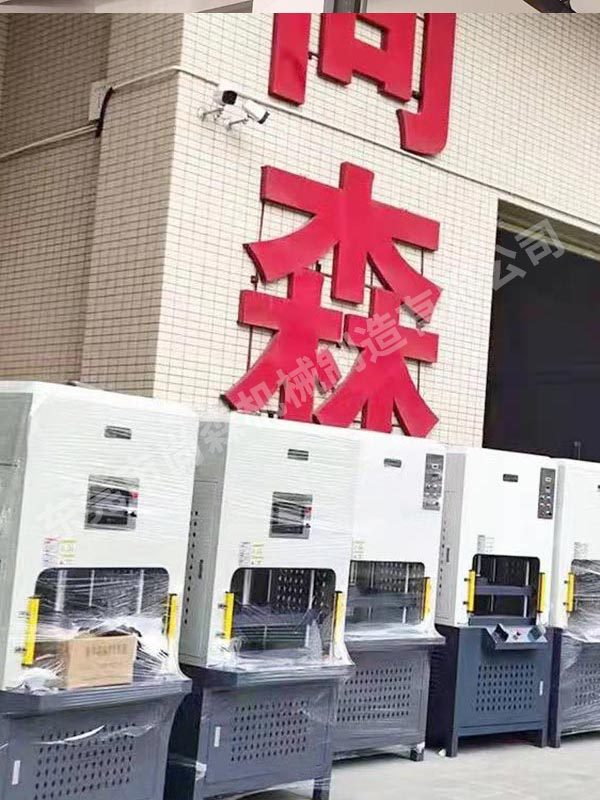
IMD (in-mold decoration) places a film inside the injection mold to decorate the surface of a plastic part. The IMD hot press handles one step of this chain: it heats printed, pre-cut film sheets and presses them into a 3D shape.
Two ways to do IMD
- In-mold transfer: printed film on a roll is fed through the injection machine and mold automatically, like a label; after molding, the graphics transfer onto the part. This method normally needs no separate forming step.
- In-mold labeling (IML): the film is printed, formed on a forming machine, trimmed and then placed in the injection mold. The IMD hot press performs the forming step here.
IML film layers
IML film usually has three layers: a substrate (mostly PET), the ink layer and an adhesive layer. After molding, the adhesive bonds film and resin into one piece; the PET with its wear-resistant coating stays on the outside, giving abrasion and scratch resistance. The original article states a surface hardness of up to 3H. Typical molding resins are PC, PMMA and PBT.
Design points of the SANSEN IMD hot press (as described in the original article)
- High-sensitivity through-beam light curtain.
- Air-over-oil booster main cylinder with ample force and smooth, responsive travel.
- Process data stored by mold number and recalled by entering the number, reducing set-up.
- PLC temperature control with touch-screen input.
- Heater plate in/out driven by a synchronous motor with an inverter for smooth movement.
- Carbon-fiber heaters for fast, even heating; compact footprint and easy mold change.
After forming, the sheet usually goes to 3D die cutting before molding. See the gas-hydraulic IMD hot press and our article IMD/IML thermoforming machines: process and applications.
Adapted from an article published on SANSEN's original Chinese website (sansendg.com) on 2022-10-18. The text was edited and restructured; technical content follows the original.